remote-ssh-kaggle-vscode


Why
Kaggle’s notebook interface is limiting once a project outgrows a few cells. Connecting over SSH gives you the full VS Code experience against Kaggle’s GPUs: integrated terminal, breakpoint debugging, and a normal file-based project layout.
It also lets you stretch GPU quota. The default is 30 hours per week — if you stop the notebook session near the end of hour 29 and SSH back in, you get roughly 12 more hours, for about 42 hours a week.
Features
- 🔑 Password authentication — no SSH keypair to generate or upload
- 🧩 Modular bash scripts — easy to read, easy to customise
- ✨ Oh My Posh included — optional pretty terminal prompt
- ⚡ Quick setup — a handful of steps end to end
And plenty more to explore once you are in.
How it works
The Kaggle notebook clones this repository and runs three small scripts — see SCRIPTS_GUIDE.md for the details of each:
| Script | Does |
|---|---|
install_ssh_server.sh |
Sets the root password and installs OpenSSH + ngrok |
add_ngrok_token.sh |
Registers your ngrok auth token |
run_ssh_server.sh |
Opens an ngrok TCP tunnel to port 22 |
Contents
- 1. Prerequisites
- 2. Set up the Kaggle notebook
- 3. Configure SSH in VS Code
- 4. Using it
- Tips and tricks
- Conclusion
1. Prerequisites
- Install Visual Studio Code: https://code.visualstudio.com/
- Create an Ngrok account: https://ngrok.com/
2. Set up the Kaggle notebook
-
2.1 Open the notebook: Notebook Example — or upload
notebook_example.ipynbfrom this repository. -
2.2 Choose
Copy & Edit: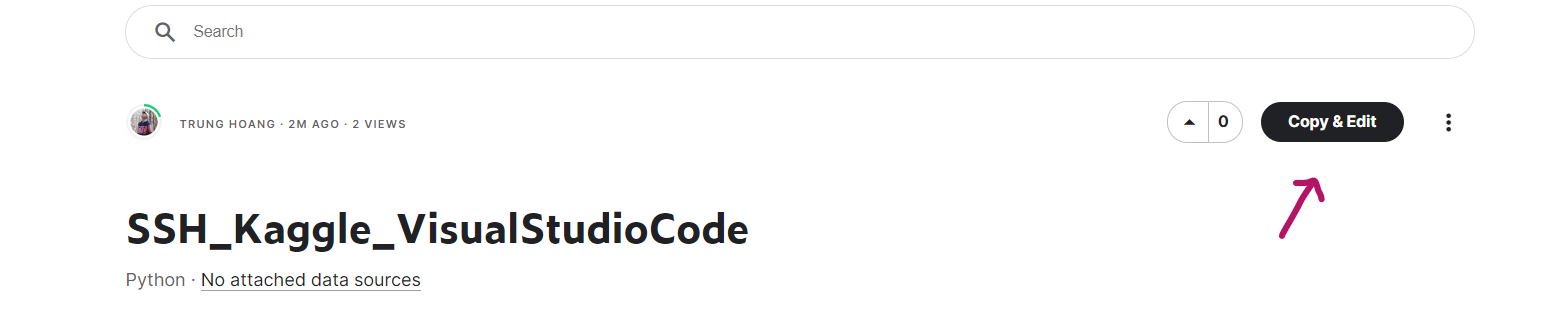
-
2.3 In the right-hand sidebar, pick one of these two GPUs:
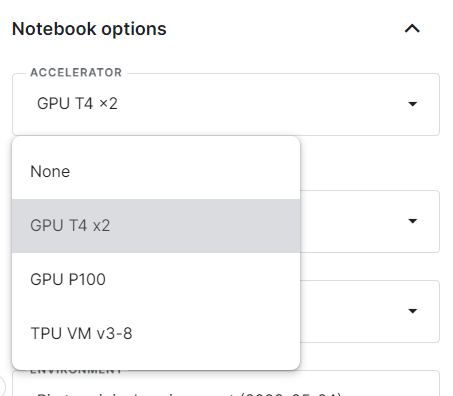
⚠️ Warning: TPU is not supported.
-
2.4 Under
persistence, selectFiles onlyso your files survive each Stop Session: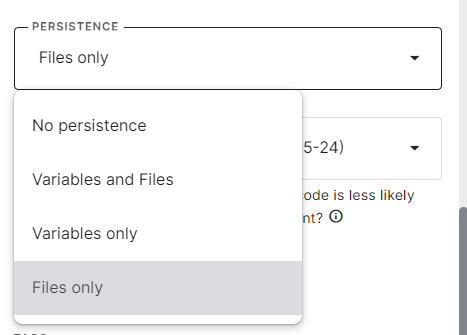
-
2.5 Go to Ngrok → Your Authtoken → press copy:
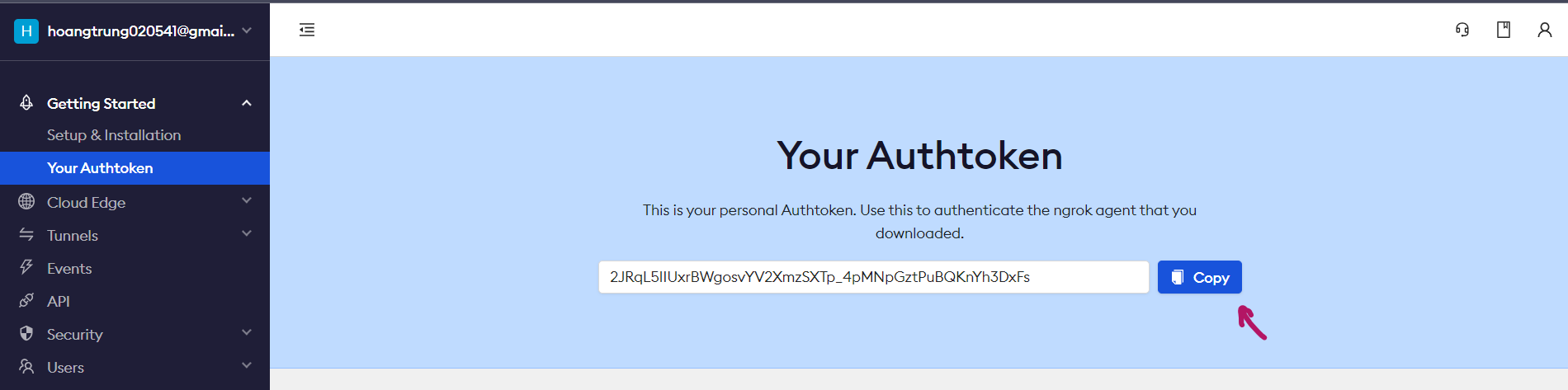
-
2.6 In cell 3 (the setup cell), set your SSH password and paste your Ngrok token:
ssh_password = "kaggle" # Change this to your desired password # Run bash scripts !bash install_ssh_server.sh $ssh_password !bash add_ngrok_token.sh YOUR_NGROK_TOKEN # Replace with your actual token -
2.7 In the last cell (cell 4 — runs
bash run_ssh_server.sh), note theHostNameandPortfrom the ngrok output, e.g.0.tcp.ap.ngrok.ioand17520. You need both in step 3.6.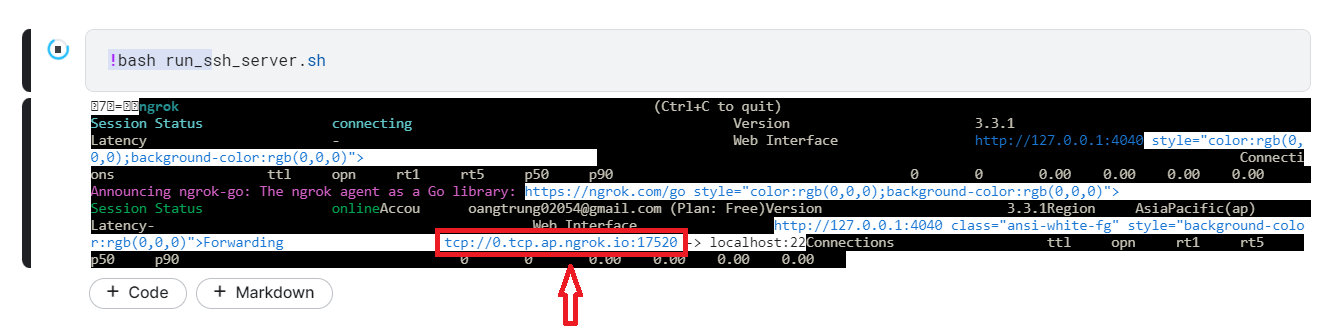
3. Configure SSH in VS Code
-
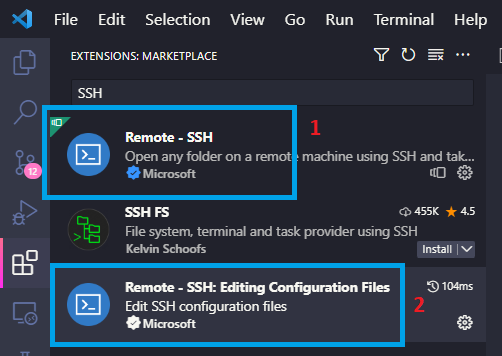
3.1 Press Ctrl+Shift+X, search for SSH, and install these two extensions:
-
3.2 For background on how Remote-SSH works, see the VS Code Remote-SSH docs.
-
3.3 Press Ctrl+Shift+P →
Remote-SSH: Connect to Host…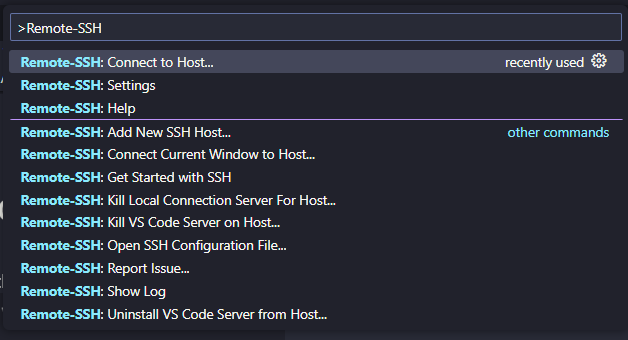
-
3.4 Press
Configure SSH Host…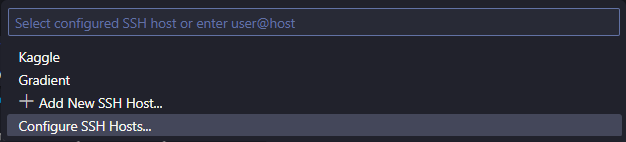
-
3.5 Select
~/.ssh/config— usually the first entry in the list.
-
3.6 Add this block to the config file:
  Host Kaggle
      HostName 0.tcp.ap.ngrok.io
      Port 17520
      User root
Field Value Where it comes from HostKaggleAny name you like HostName0.tcp.ap.ngrok.ioStep 2.7 Port17520Step 2.7 UserrootAlways root -
3.7 Press Ctrl+S, then Ctrl+Shift+P →
Remote-SSH: Connect to Host… -
3.8 Pick the host you just named —
Kaggle:
-
3.9 When prompted, enter the password you set in step 2.6 (default:
kaggle). -
3.10 Press
continue:
💡 Tip: If VS Code asks you to choose the operating system, select
linux. -
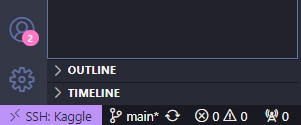
3.11 The bottom-left corner confirms the connection:
4. Using it
-
4.1 Press Ctrl+K O, enter the path
/kaggle, pressok.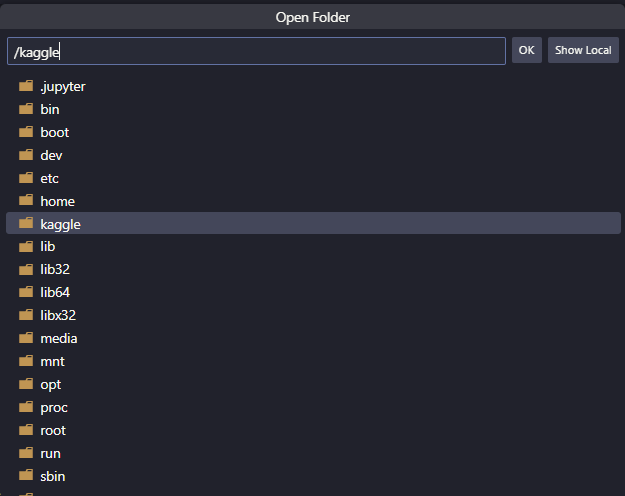
-
4.2 Open a terminal with Ctrl+J. The system python already carries the full Kaggle stack (torch, numpy, …), so you can start working right away.
uvis preinstalled for anything you need to add:uv pip install --system <package>Prefer an isolated environment? Create it with
--system-site-packagesso it can still see the preinstalled Kaggle packages:uv venv --system-site-packages .venv source .venv/bin/activate uv pip install <package>⚠️ Warning: a plain
uv venv, without--system-site-packages, starts empty —import torchfails inside it. And outside a virtual environmentuv pip installneeds the--systemflag, otherwise it exits withNo virtual environment found. -
4.3 Activate CUDA. The image already ships the driver — it is simply missing from the SSH shell’s environment, because that shell does not inherit the notebook kernel’s paths. Two exports fix it instantly, with no download:
  export PATH=/opt/bin:$PATH
  export LD_LIBRARY_PATH=/usr/local/nvidia/lib64:$LD_LIBRARY_PATH
They apply to the current shell only — append them to
/root/.bashrcif you open several terminals, and redo them after each Stop Session.📝 Fallback: if those paths move in a future Kaggle image, installing the driver utilities works too — it just downloads a few hundred MB, and also has to be repeated after every Stop Session:
sudo apt install nvidia-utils-515 -y -
4.4 Check the GPU is visible:
nvidia-smi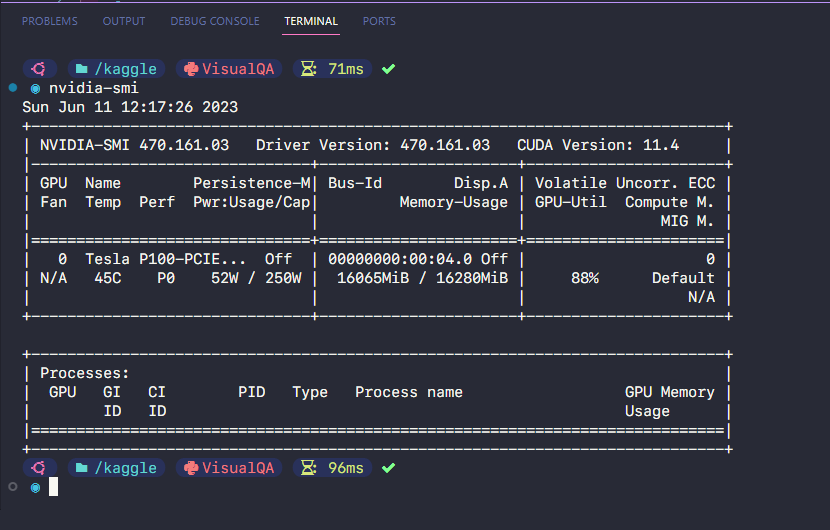
💡 Tip: If
nvidia-smireports no devices, the session has no GPU attached at all — check theAcceleratorsetting from step 2.3. -
4.5 After each Stop Session, you only need to redo a subset:
- Run cell 4 to get the new hostname and port
- Update your SSH config with them (step 3.6)
- Reconnect from VS Code (steps 3.7 → 3.8 → 3.9)
- Carry on working (steps 4.1 → 4.2 → 4.3 → 4.4)
Tips and tricks
- To stretch GPU quota, stop the notebook session and SSH back in before you hit the 30-hour weekly limit — that gets you up to ~42 hours a week.
- Use the integrated terminal rather than notebook cells for anything shell-shaped.
- Set breakpoints and use the VS Code debugger instead of
printdebugging. - Keep code in
.pyfiles and import across them, like a normal project.
Where your files live
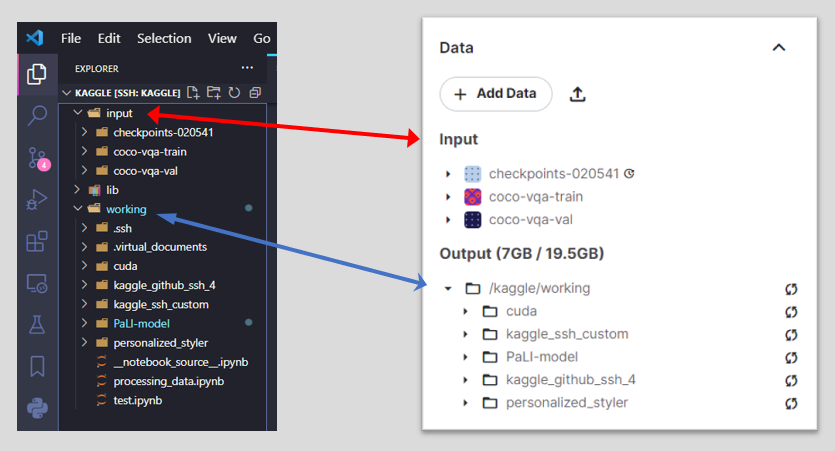
The Data panel on the right has two sections, and they map to different paths with
different rules:
| Section | Path | Writable | Size limit |
|---|---|---|---|
| Input | /kaggle/input/... |
❌ Read-only | ~107 GB private, unlimited public |
| Output | /kaggle/working/... |
✅ Your workspace | ~20 GB |
Conclusion
With Remote-SSH Kaggle and Visual Studio Code you get the full weight of Kaggle’s GPUs behind a development environment you actually enjoy using — a real terminal, a real debugger, and a normal project layout. Set it up once and the only thing you repeat between sessions is step 4.5.